
In the context of industrial automation, smart manufacturing, and modern electromechanical systems, motor selection is no longer just a component decision—it directly impacts overall system performance, cost structure, and operational stability. Brushless DC motors (BLDC) and servo motors are two of the most commonly used drive solutions in industry today, but they are often misunderstood during selection. In simple terms, BLDC motors focus on high efficiency, low maintenance, and stable continuous operation, while servo motors are designed for high-precision closed-loop control and complex motion tasks. Understanding their fundamental differences is essential for achieving the right balance between performance and cost in different industrial scenarios.
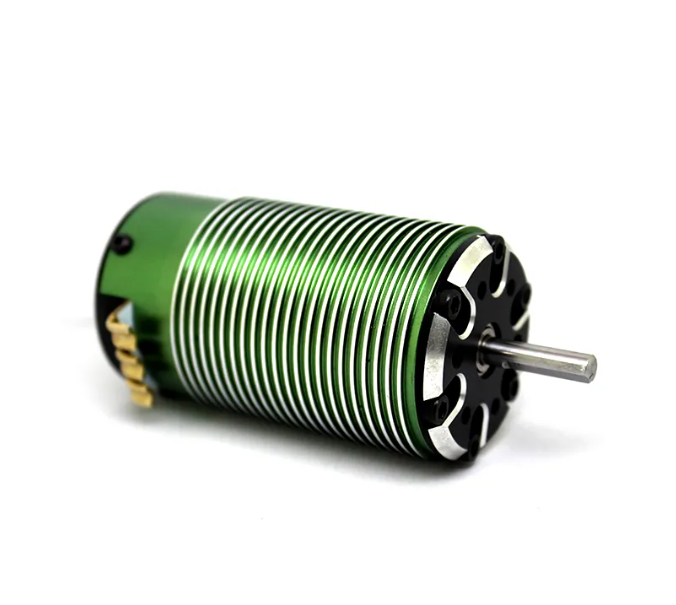
Fundamental Differences Between BLDC and Servo Motors
To truly understand their differences, it is necessary to look at both structural composition and system positioning.
- BLDC motors: Use electronic commutation for continuous rotation and feature a relatively simple structure without mechanical carbon brushes
- Servo motors: Consist of a motor body, encoder, and driver, forming a complete closed-loop control system
Control Method Comparison: Open-Loop Operation vs Closed-Loop Feedback
Control architecture is the most critical technical difference between the two, directly affecting precision and system complexity.
- BLDC: Typically uses open-loop or simplified closed-loop control, focusing on stable output and efficiency
- Servo: Uses a full closed-loop system with encoder feedback for real-time correction of position, speed, and torque errors
Application Scenarios: General-Purpose Power vs High-Precision Motion
Different control philosophies define clear boundaries in industrial applications.
- BLDC: Suitable for fans, pumps, conveyor systems, and ventilation equipment requiring long-duration operation
- Servo: Suitable for robotic joints, CNC machines, and automated assembly systems requiring high precision
Cost and System Complexity: Economic vs High-End Solutions
In real-world engineering projects, cost and system complexity are often key decision factors.
- BLDC: Simple structure, mature drive solutions, lower overall cost, and easier maintenance
- Servo: High system integration with encoder and high-performance drivers, resulting in higher cost
How to Choose Correctly in Industrial Applications?
In practical engineering, selection should be based on requirements rather than performance comparison alone.
- BLDC: Ideal for long-duration operation and applications without strict positioning accuracy requirements
- Servo: Ideal for high-precision positioning, multi-axis coordination, and complex motion control systems
Extended Differences Between BLDC and Servo Motors
Beyond core distinctions, they also differ in operating characteristics and usage experience.
- BLDC offers higher energy efficiency, making it suitable for energy-saving and continuous-duty applications
- Servo provides stronger dynamic response, suitable for rapidly changing loads and complex motion paths
- BLDC has better environmental adaptability and lower failure rates due to simpler structure
- Servo systems require more tuning but offer superior accuracy and consistency
Common Mistakes in Industrial Motor Selection
Many performance issues are not caused by the motor itself but by incorrect selection strategies.
- Using BLDC motors in high-precision positioning systems, leading to insufficient accuracy
- Overusing servo systems, resulting in unnecessary cost increases and performance waste
- Ignoring load variations and actual operating conditions, causing inefficient operation
- Focusing only on motor parameters while neglecting system-level compatibility
BLDC motors and servo motors are not competing technologies but two different engineering solutions designed for distinct industrial needs. BLDC is better suited for high-efficiency and stable operation, while servo systems are ideal for high-precision and complex motion control applications. In real-world engineering, proper selection is often more important than simply choosing higher specifications, as it directly affects overall system efficiency and cost structure. For enterprises, choosing a reliable motor supplier is equally critical. As a professional brushless motor manufacturer, X-TEAM provides a wide range of high-performance BLDC motor solutions widely used in industrial equipment, fan systems, and smart control applications, helping customers achieve higher efficiency and more stable power output.