
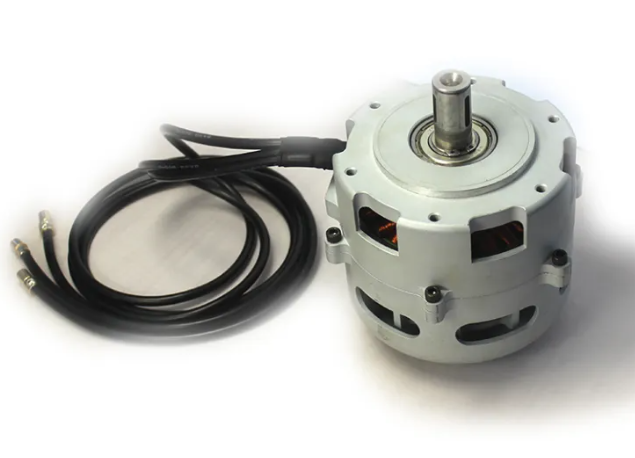
With the continuous advancement of industrial automation, motors as core power components directly affect equipment efficiency, stability, and service life. BLDC motors are widely used in production lines, robotics, and conveyor systems due to their high efficiency, low maintenance, and excellent controllability. However, industrial environments are complex, loads vary significantly, and requirements are far higher than in consumer applications. Therefore, proper motor selection is a critical step in engineering design. Only through systematic analysis based on real working conditions can the most suitable motor solution be chosen.
Define Load and Torque Requirements
The first step in industrial motor selection is accurately understanding load characteristics and torque requirements, which form the foundation of sizing decisions.
- Analyze load type: Identify whether the load is constant, variable, or impact-based, as each requires different motor performance.
- Determine rated torque: Calculate continuous operating torque based on real working conditions to avoid undersizing.
- Consider starting torque: Industrial equipment often requires higher torque during startup.
- Evaluate peak load: Ensure the motor can handle short-term overload conditions.
- Add safety margin: Include appropriate design reserves to improve system reliability.
Focus on Speed and Efficiency
Speed and efficiency directly affect system performance and energy consumption, making them key selection factors.
- Match actual operating speed: Choose a motor with an appropriate rated speed range for the application.
- Pay attention to efficiency curve: Ensure the motor operates in a high-efficiency range under normal conditions.
- Avoid long-term low-efficiency operation: Operating outside optimal ranges increases energy loss and heat.
- Consider speed regulation range: Industrial applications often require wide speed adjustment capability.
- Evaluate system-level efficiency: Not only the motor, but also the entire system energy consumption should be considered.
Select Appropriate Control System and Drive
The control system determines the upper performance limit of the motor and is critical in industrial selection.
- Match control precision requirements: High-precision systems require more advanced control methods.
- Consider response speed: Automation systems need fast dynamic response.
- Driver compatibility: Ensure stable communication between motor and controller.
- Communication interface selection: Choose suitable interfaces based on system requirements.
- System scalability: Consider future upgrades and integration possibilities.
Environmental Adaptability and Reliability Design
Industrial environments are complex, making protection and reliability essential considerations.
- Protection rating selection: Choose appropriate IP rating based on dust and water exposure conditions.
- Thermal management capability: Important for high-load or continuous operation scenarios.
- Vibration resistance: Suitable for environments with significant mechanical vibration.
- High-temperature tolerance: Ensures stable operation in elevated temperature conditions.
- Long-term reliability: Prefer designs with long lifespan and low maintenance requirements.
Selecting an industrial BLDC motor is not a simple comparison of single parameters but a comprehensive evaluation of load, speed, control system, and environmental conditions. Only by starting from real application requirements and conducting a full analysis can the most suitable motor solution be chosen. In the context of modern industrial automation, proper selection not only improves equipment performance but also reduces energy consumption and maintenance costs, ultimately enhancing overall production efficiency and system stability.