
Motor speed instability is a very common issue in industrial equipment and RC systems. Many users immediately assume the motor itself is faulty, but in most cases, unstable speed is caused by power supply issues, control parameter mismatch, or load imbalance rather than a hardware defect. To truly solve this problem, it is necessary to analyze the entire system instead of replacing a single component.
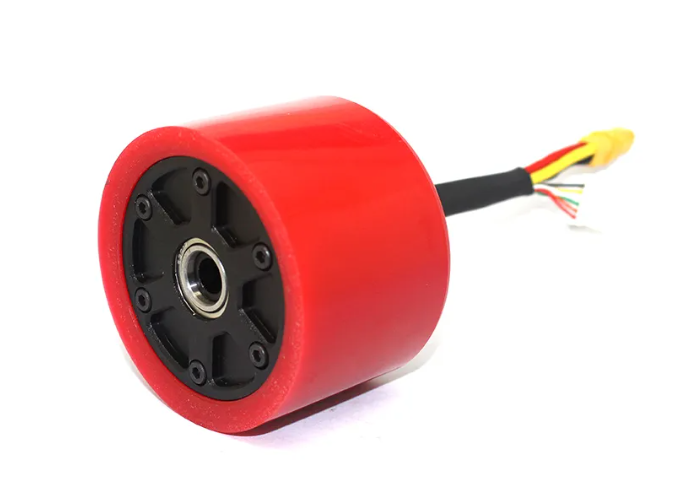
Common Causes of Motor Speed Instability
Before troubleshooting speed fluctuations, it is important to analyze the system as a whole and identify the key factors that may affect stable motor operation, which helps avoid misdiagnosis and improves troubleshooting efficiency.
- Unstable power supply voltage or insufficient power capability
- Large load fluctuations causing insufficient torque output
- Improper ESC (electronic speed controller) parameter settings
- Motor winding or manufacturing inconsistency issues
- Sensor or encoder feedback errors (in closed-loop systems)
How Power Supply Issues Affect Motor Speed?
A stable power supply is the foundation of motor operation. Once voltage fluctuates or power is insufficient, speed instability becomes almost inevitable, so the power system should always be checked first.
- Battery voltage drop leads to proportional speed reduction
- High internal resistance causes noticeable voltage drop under load
- Insufficient power capacity results in continuous speed loss
- Long wires or thin cables increase energy loss
Impact of Improper ESC Settings on Motor Speed
In brushless motor systems, controller parameter mismatch directly affects output stability, and even small errors can lead to fluctuations or oscillation.
- Incorrect PWM frequency causes discontinuous output
- Excessive startup acceleration creates speed shocks
- Improper PID settings cause oscillation in closed-loop systems
- Insufficient low-speed compensation leads to noticeable jitter
How Load Changes Cause Speed Fluctuation?
In many real-world applications, the load is not constant, so motor speed naturally varies with mechanical conditions.
- Sudden load increase causes immediate speed drop
- Uneven mechanical resistance leads to periodic fluctuations
- Gear or belt backlash affects stability
- High-inertia loads result in delayed response
How to Effectively Solve Motor Speed Instability?
To fundamentally solve speed instability, optimization must be applied across multiple dimensions, including power supply, control system, load design, and motor selection, rather than relying on single-point adjustments.
- Improve power stability to ensure continuous output
- Optimize ESC parameters to match motor characteristics
- Improve load structure and transmission design
- Use closed-loop control systems for higher precision
- Select high-consistency and high-efficiency motor products
Motor speed instability is essentially a system matching issue rather than a single component failure. Only through holistic optimization of power supply, control, and load can long-term stable operation be achieved. In practical engineering applications, proper selection is often more effective than repeated tuning. As a professional brushless power system manufacturer, X-TEAM provides a wide range of high-performance BLDC motor solutions widely used in industrial equipment and intelligent control systems, helping customers achieve more stable and efficient power output.