
With the rapid development of industrial automation, smart manufacturing, and equipment upgrades, motor selection has become a critical factor affecting overall system performance. BLDC motors and servo motors are two of the most commonly used solutions in modern industry, but they differ significantly in structure, control methods, and application scenarios. Many companies struggle with choosing between them, often leading to unnecessary cost increases or performance mismatches. In general, BLDC motors are more suitable for efficient continuous operation, while servo motors are designed for high-precision control and dynamic response. A clear understanding of their differences is essential for making the right decision in industrial applications.
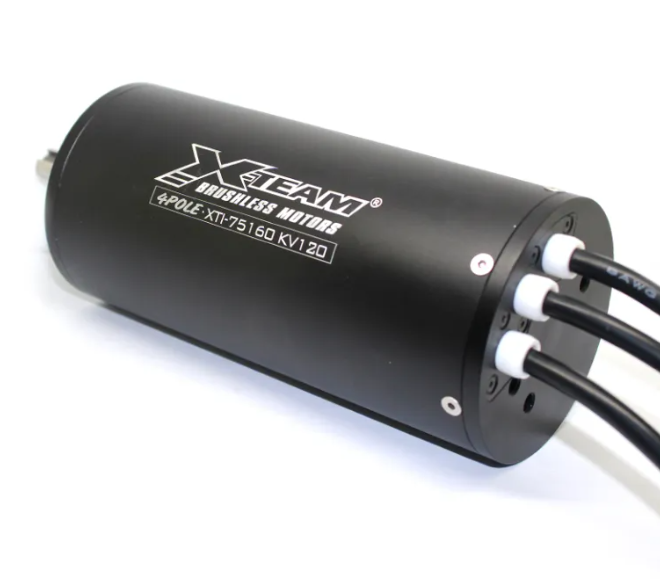
Which Industrial Applications Are More Suitable for BLDC Motors?
BLDC motors are widely used due to their high efficiency, low maintenance, and long service life.
- Suitable for continuous-running equipment such as fans, pumps, and conveyor systems
- Brushless design reduces maintenance requirements and operating costs
- High energy efficiency makes them ideal for long-term operation
- Lower cost makes them suitable for large-scale industrial deployment
- Stable performance in medium to low precision control scenarios
What Are the Core Advantages of Servo Motors?
Servo motors are designed for high-precision control systems that require accuracy and fast response.
- Closed-loop control enables precise position, speed, and torque regulation
- Fast response speed makes them suitable for dynamic load changes
- High precision control is ideal for robotics and CNC machines
- Supports complex motion trajectories and advanced automation tasks
- Higher system integration, but also higher overall cost
Key Differences Between BLDC and Servo Motors
Understanding their differences helps make more accurate selection decisions in industrial projects.
- BLDC motors typically use open-loop or simplified control, while servo systems use full closed-loop control
- BLDC focuses on efficiency and stable operation, while servo focuses on precision control
- BLDC has a simpler structure and lower cost, while servo systems are more complex and expensive
- BLDC is ideal for continuous operation, servo is ideal for dynamic motion control
- Servo motors offer significantly higher accuracy and responsiveness
How to Choose the Right Motor for Industrial Applications?
Proper selection based on application requirements is key to balancing cost and performance.
- Use BLDC motors for fans, pumps, and conveyor systems requiring continuous operation
- Choose servo motors for robots, CNC machines, and high-precision equipment
- For medium-precision and cost-sensitive projects, BLDC is often the preferred option
- High dynamic and positioning accuracy applications require servo systems
- Consider cost, control accuracy, and system complexity together
Common Mistakes in Motor Selection
Many industrial failures are not caused by motor quality but by improper selection strategies.
- Focusing only on price while ignoring system compatibility
- Ignoring load variation and operational conditions
- Failing to consider long-term efficiency and maintenance costs
- Using BLDC motors in high-precision applications incorrectly
- Overusing servo systems and increasing unnecessary costs
There is no absolute “best” motor in industrial applications—only the most suitable one. BLDC motors offer advantages in efficiency and cost, while servo motors excel in precision and dynamic control. Companies must evaluate their specific application scenarios to achieve the best balance between performance and cost. For businesses seeking efficient and reliable power solutions, choosing a professional supplier is essential. As a dedicated brushless motor manufacturer, X-TEAM provides a wide range of industrial-grade BLDC motor solutions, helping companies achieve more stable and efficient power output across different applications.