
With continuous advancements in motor technology, brushless motors (BLDC motors) are gradually replacing traditional brushed motors and becoming the mainstream choice in fans, industrial equipment, drones, and smart devices. Their most obvious feature is that they “do not use carbon brushes,” but this is not a reduction in function—instead, it is an upgrade that achieves higher efficiency and longer service life through electronic commutation. So why can carbon brushes be removed, and how does the motor still operate? The following sections break it down from structure and working principles.
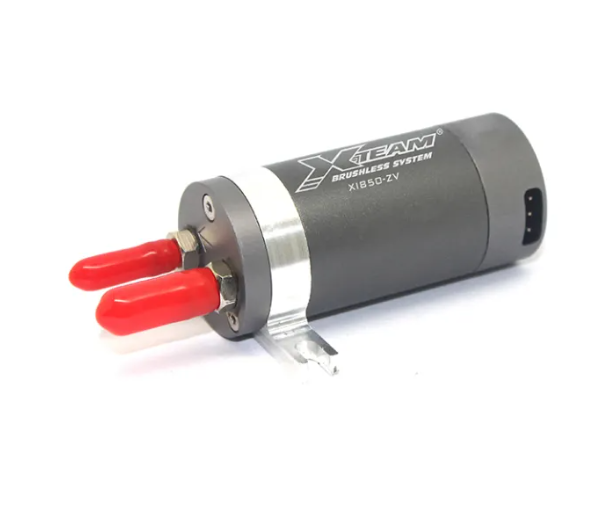
Why Can Brushless Motors Eliminate Carbon Brushes?
The key innovation of brushless motors is replacing mechanical contact with electronic control.
- Electronic commutation replaces traditional carbon brushes and mechanical commutators
- Driver circuits control current direction to switch magnetic fields
- The rotor rotates using permanent magnets without physical electrical contact
- Mechanical structure is simplified for more compact and reliable design
What Structural Changes Occur After Removing Carbon Brushes?
Eliminating carbon brushes significantly improves both structure and operation.
- Fewer friction components, resulting in a simpler mechanical design
- Avoids performance degradation caused by brush wear
- Reduces electrical sparking and electromagnetic interference
- Improves stability during high-speed operation
- Minimizes dust generation, increasing internal cleanliness and reliability
What Advantages Do Brushless Motors Have Over Brushed Motors?
Structural improvements directly lead to performance upgrades.
- Longer service life with reduced maintenance and replacement costs
- Lower energy loss and higher overall efficiency
- Reduced noise, suitable for quiet applications
- Lower heat generation, ideal for continuous operation
- Easier to achieve precise speed control and intelligent adjustment
Why Are Brushless Motors Preferred in Modern Equipment?
As industries and consumer electronics evolve, motor performance requirements continue to rise.
- Supports high-precision control for smart devices
- Suitable for drones, robotics, and high-dynamic applications
- Meets long-term stable operation needs in industrial equipment
- Easily integrates with electronic control systems
- Improves overall efficiency and system performance
Why Do Carbon Brushes Limit Traditional Motors?
Although simple in structure, brushed motors have inherent drawbacks.
- Carbon brushes are wear parts that degrade over time
- Friction generates dust, affecting internal cleanliness
- High-speed operation may cause sparks and heat buildup
- Contact instability can affect motor performance consistency
The reason brushless motors have become mainstream is that they completely replace mechanical contact with electronic control, fundamentally solving issues of wear and inefficiency. As smart manufacturing and high-performance devices continue to develop, these structural advantages will become even more important. For businesses, choosing a reliable BLDC motor solution is crucial. As a professional power system manufacturer, X-TEAM provides a wide range of high-performance BLDC motor solutions widely used in industrial, fan, and smart device applications, helping customers achieve higher efficiency and more stable power output.