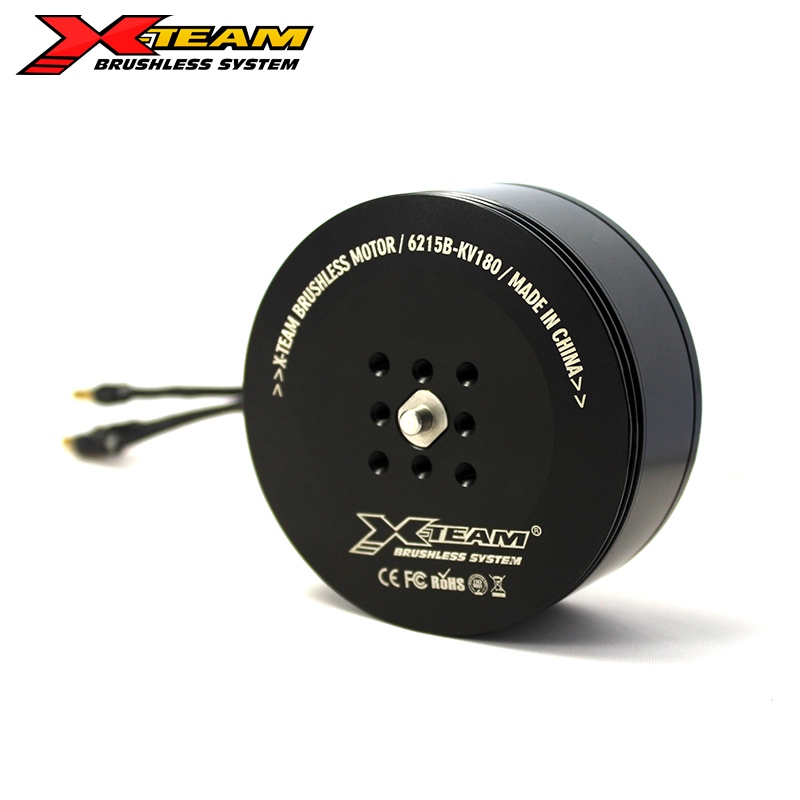
When building or upgrading an RC vehicle, selecting the right brushless DC (BLDC) motor is one of the most critical decisions you will make. The motor determines your RC’s speed, torque, efficiency, and overall performance. This guide will help you understand the key factors to consider when choosing a brushless motor for your RC project.
1. Understanding Motor Size and KV Rating
The motor size (e.g., 2205, 2212, 2830) typically refers to the stator diameter and height in millimeters. A larger motor generally produces more torque but adds weight.
KV Rating indicates the RPM per volt applied with no load. A higher KV motor spins faster but draws more current and produces less torque. Low KV (1000-2000) works best for larger props, heavy-lift drones, and crawlers where torque matters most. Medium KV (2000-3000) offers a good balance for general RC cars and medium-sized drones. High KV (3000+) is ideal for small, lightweight racing drones and speed-focused RC cars.
2. Consider Your Power System
Your motor must work harmoniously with your ESC (Electronic Speed Controller) and battery. Key points to consider:
- ESC Amperage Rating: Make sure your ESC can handle the motor’s maximum current draw with at least a 20% safety margin.
- Battery Voltage: A 4S battery (14.8V) makes a 2000KV motor spin at nearly 30,000 RPM, while a 6S battery (22.2V) pushes it beyond 44,000 RPM.
- Drive Train Load: Larger propellers or heavier drivetrains demand motors with higher torque ratings.
3. Motor Construction Quality
When evaluating a brushless motor, examine these key aspects:
- Magnets: High-quality N52 or N54 neodymium magnets provide stronger magnetic fields and better efficiency.
- Stator Laminations: Thin stator laminations (0.2mm or less) reduce eddy current losses at high RPM.
- Bearings: Japanese or German precision bearings (NSK, EZO) extend motor life and reduce friction.
- Copper Windings: Clean, tight windings with high fill factor maximize power output.
4. Efficiency and Heat Management
An efficient brushless motor converts more electrical energy into mechanical power and less into waste heat. Look for motors with low internal resistance (measured in milliohms), good ventilation or integrated cooling fans for sustained high-power operation, and smooth operation without cogging at low speeds. Proper thermal management extends motor life and maintains consistent performance during longer runs.
5. Application-Specific Recommendations
RC Crawlers: Choose a low KV sensored brushless motor (around 1800-2500KV) for smooth low-speed control and excellent torque delivery.
RC Racing Buggies/Truggies: A 4-pole brushless motor in the 3000-4000KV range on 2S-3S provides excellent acceleration and top speed.
FPV Racing Drones: Look for motors in the 2205-2306 size range with 2300-2600KV for 5-inch props on 4S, or 1600-1800KV for 6S setups.
RC Boats: Water-cooled brushless motors are essential. Choose a lower KV motor with a larger can size for torque to overcome water resistance.
Conclusion
Choosing the right brushless DC motor involves balancing size, KV rating, power system compatibility, and build quality for your specific application needs. At X-TEAM, we offer a wide range of high-performance brushless motors designed for RC cars, drones, boats, industrial equipment, and more. Browse our product selection to find the perfect motor for your next RC project.