
In the field of diver propulsion vehicles (DPVs), Italian brands have long held a strong position in the high-end market. They are widely used in technical diving, cave diving, wreck exploration, and professional rescue operations. When selecting an Italian underwater scooter, one frequently discussed question is whether models equipped with high-torque motors are actually safer. To answer this, it is necessary to examine underwater operating conditions, motor characteristics, and real-world diving requirements.
Technical Characteristics of Italian Underwater Scooters
Italian underwater scooters are well known for their robust construction, stable power output, and long-term reliability in harsh underwater environments. Compared with recreational-grade products, these scooters are designed with greater emphasis on controllability in complex conditions, including strong currents, increasing depth pressure, and additional equipment load.
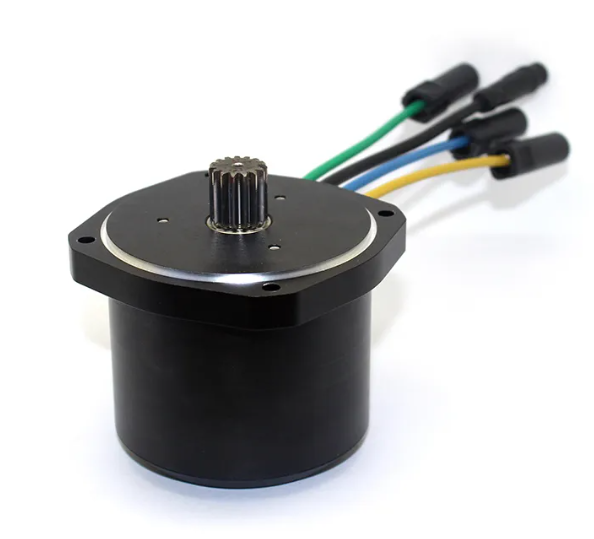
In terms of motor configuration, Italian manufacturers commonly adopt low-speed, high-torque brushless motor designs, rather than focusing solely on high rotational speed. This design philosophy closely aligns with the needs of professional and technical diving applications.
What Is a High-Torque Motor?
A high-torque motor is characterized by its ability to deliver substantial driving force at relatively low rotational speeds. This means that the scooter can generate effective thrust during startup, speed changes, or when encountering water resistance, without relying on extremely high RPM to compensate.
In underwater environments, hydrodynamic resistance is significantly higher than air resistance. As a result, propulsion efficiency depends less on peak motor speed and more on the torque curve of the motor and its matching with the propeller.
Why High-Torque Motors Offer Safety Advantages
From a practical diving perspective, high-torque motors provide several important safety benefits.
In strong currents or sudden high-resistance situations, a high-torque motor can maintain consistent thrust output, reducing the risk of abrupt speed loss or propulsion interruption. This is particularly critical in confined environments such as caves and wrecks.
In terms of handling, high-torque scooters typically deliver smoother and more linear acceleration and deceleration. This predictable response helps divers maintain stable body position and reduces the likelihood of control errors.
From a system reliability standpoint, high-torque motors often operate under lower relative load during normal cruising. This results in reduced heat generation and improved long-term durability, which is especially important for extended dives or repeated missions.
Why Italian Scooters Favor High-Torque Designs
Italian underwater scooter manufacturers generally design their products with extreme operating scenarios in mind, such as deep water, low temperatures, high salinity, and heavy equipment towing. Under these assumptions, high-torque motors pair more effectively with large-diameter, low-RPM propellers, improving overall propulsion efficiency.
Although this approach may not prioritize impressive top-speed figures on specification sheets, it delivers superior control, stability, and endurance in real underwater use.
Do All Divers Need High-Torque Scooters?
High-torque motors are not automatically necessary for every diver. For shallow recreational dives, short-range movement, or divers carrying minimal equipment, medium-torque scooters may be entirely sufficient.
However, for technical divers, underwater photographers, or dives involving heavy gear loads, high-torque scooters provide greater safety margins and operational tolerance.
Choosing a high-torque configuration should therefore be based on diving environment complexity, mission profile, and diver experience level.
Practical Tips for Choosing an Italian Underwater Scooter
When selecting an Italian underwater scooter, it is advisable to focus on the following factors:
the scooter’s sustained thrust performance under rated load rather than peak values;
whether the motor and propeller are designed and matched by the original manufacturer;
availability of multi-level thrust control and smooth speed transitions;
long-term sealing reliability and ease of maintenance.
These considerations often provide a more accurate indication of real-world performance than raw speed or power specifications alone.
Conclusion
From a professional diving perspective, high-torque motors clearly offer advantages in safety, stability, and predictable handling, which explains why they are widely adopted in Italian underwater scooters. High torque does not represent excessive performance, but rather an engineering choice better suited to real underwater conditions. For divers who prioritize reliability and safety margins, underwater scooters equipped with high-torque motors are well worth considering.