
The motor is the core of a drone’s power system, affecting thrust output, flight stability, endurance, and payload capacity. Different application scenarios place different emphasis on performance, efficiency, and weight. When the motor selection does not match the operating environment, issues such as insufficient power, higher temperature, or reduced efficiency may occur. A comprehensive evaluation based on mission type, structural conditions, and energy consumption requirements helps maintain stable flight performance across various conditions.
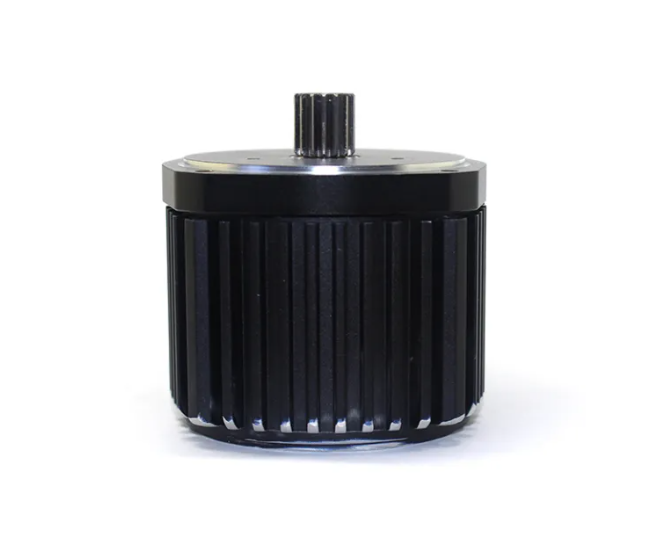
Selecting the Motor Based on UAV Type
Before choosing a motor, it is important to clarify the UAV type and intended use, as different configurations have different requirements for power, response, and efficiency, which helps make parameter matching more reasonable.
- Multirotor UAVs are better suited to lightweight and fast-response motors to support stable hovering and agile control
- Fixed-wing UAVs focus more on cruising efficiency and continuous output, making them suitable for long-endurance missions
- Industrial or transport UAVs require higher torque to support payload and operation in more complex environments
Voltage and Power Matching
Voltage and power are key parameters of the motor and need to be coordinated with the battery, ESC, and overall system to maintain stable and efficient operation.
- Voltage should align with the battery system and electronic speed controller to ensure smooth power delivery
- Insufficient power may limit thrust performance, affecting takeoff or payload capability
- Excessive power can increase energy consumption and system load
- Leaving a certain power margin can help handle load variations and complex conditions
Speed and Torque Selection Logic
Speed and torque influence flight characteristics, and balancing them according to mission needs helps achieve better performance and propulsion efficiency.
- High-speed motors are suitable for lightweight racing UAVs, offering fast response and agility
- High-torque motors are better suited for cargo or industrial UAVs, supporting stable hovering and continuous output
- Matching propeller size with motor output helps improve overall propulsion efficiency
KV Rating and Efficiency Relationship
KV rating represents the motor’s RPM per volt and should be evaluated together with voltage, load, and efficiency for better application matching.
- High-KV motors are suitable for small-prop high-speed systems with faster response but lower torque
- Low-KV motors are better for large-prop low-speed systems with more stable output
- Voltage changes affect actual RPM, requiring system-level coordination
- Operating within high-efficiency ranges helps reduce heat and extend endurance
- Loaded performance data reflects real working conditions more accurately
Structural and Environmental Adaptability
Beyond power output, motor structure and environmental adaptability also affect long-term reliability and stability.
- Dustproof and moisture-resistant designs help maintain performance in outdoor environments
- Effective heat dissipation supports long-duration flight operations
- Motor dimensions should match the frame structure for stable installation and balance
- Vibration and noise considerations are important in aerial imaging and precision applications
UAV motor selection involves system-level matching rather than relying on a single parameter. A balanced configuration based on airframe structure, load requirements, voltage platform, and operating environment helps improve flight stability, endurance, and control performance. X-TEAM provides high-performance UAV motors and BLDC power systems covering multirotor, industrial, and custom solutions, delivering reliable power support for different flight applications and maintaining efficient performance across various operating conditions.