
In modern motor applications, performance, stability, and control precision are all closely tied to how well a motor is understood at the electrical level. Among the key concepts in Brushless DC Motor (BLDC) technology, back electromotive force plays a crucial role in determining how the motor behaves during rotation. Whether in drones, RC systems, or industrial automation, understanding this principle helps engineers and users optimize performance and improve efficiency. For users exploring high-performance motor solutions, especially in demanding applications, grasping the meaning and function of back EMF is essential for selecting the right BLDC motor and achieving reliable long-term operation.
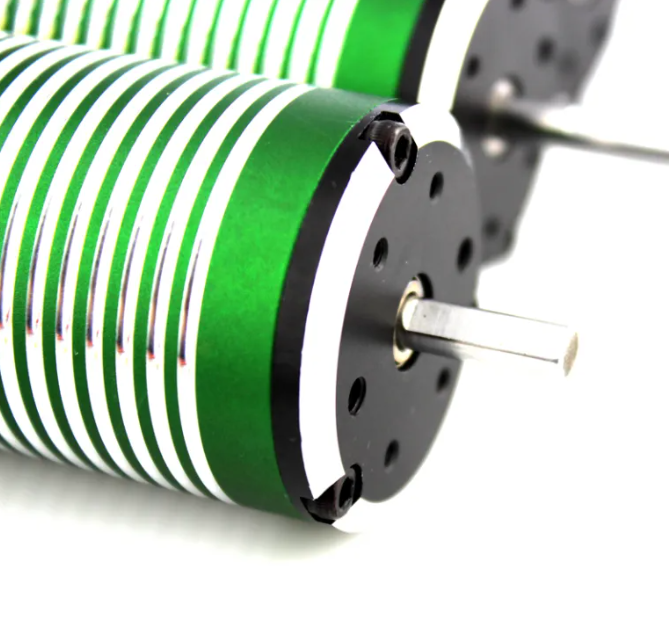
What Back EMF Means in a BLDC Motor
Back EMF is the voltage generated by the motor during rotation, and it directly reflects the motor’s operating state.
- Voltage generation principle: When the rotor magnets move past the stator windings, a voltage is induced due to electromagnetic induction.
- Opposing direction: This induced voltage opposes the applied supply voltage, hence the term “back” EMF.
- Speed relationship: The faster the motor rotates, the higher the back EMF becomes, forming a direct correlation with speed.
Why Back EMF Is Important for Motor Operation
Back EMF is not just a byproduct of motion—it is essential for how BLDC motors are controlled and stabilized.
- Rotor position detection: In sensorless BLDC systems, back EMF helps determine rotor position without physical sensors.
- Commutation timing: It provides signals for the controller to switch current phases at the right moment.
- Speed feedback: The magnitude of back EMF is used to estimate motor speed in real time.
- System efficiency: Proper utilization of back EMF improves overall energy conversion efficiency.
How Back EMF Affects BLDC Motor Performance
The characteristics of back EMF directly influence motor behavior under different operating conditions.
- Startup behavior: At low speed, weak back EMF makes control more challenging and requires special starting strategies.
- High-speed stability: Strong and predictable back EMF helps maintain stable operation at high RPM.
- Torque characteristics: It affects current flow, which in turn influences torque output.
- Thermal performance: Efficient control of back EMF reduces unnecessary current draw and heat generation.
Practical Value of Understanding Back EMF in Applications
Knowing how back EMF works helps users and engineers make better design and selection decisions.
- Better motor selection: Helps choose appropriate BLDC motors for drones, RC vehicles, and automation systems.
- Improved controller tuning: Allows optimization of ESC parameters for smoother performance.
- Enhanced system reliability: Reduces risks of misalignment between motor and controller.
- Energy optimization: Improves battery usage efficiency in portable and embedded systems.
- Broader application scope: Enables advanced use in precision robotics and high-speed applications.
Back electromotive force is a fundamental concept that defines how BLDC motors interact with electrical energy during operation. It is not only a physical phenomenon but also a critical feedback mechanism that enables precise control, efficient operation, and stable performance. From sensorless control systems to high-speed applications, back EMF plays a central role in ensuring smooth and efficient motor behavior. For users seeking high-performance motion solutions, understanding this principle helps unlock the full potential of BLDC motors and achieve better system-level optimization in real-world applications.