
As devices demand higher performance and lower energy consumption, motor efficiency has become a key deciding factor. From industrial equipment to smart devices, more applications are adopting BLDC motors as their core drive solution. These motors not only operate smoothly but also demonstrate clear advantages in energy conversion. Compared with traditional motors, BLDC motors reduce losses and deliver higher output efficiency under the same power conditions, making equipment more energy-efficient and reliable over long-term operation. From the perspective of BLDC motor knowledge, understanding these efficiency advantages helps achieve a better balance between performance and cost in real applications.
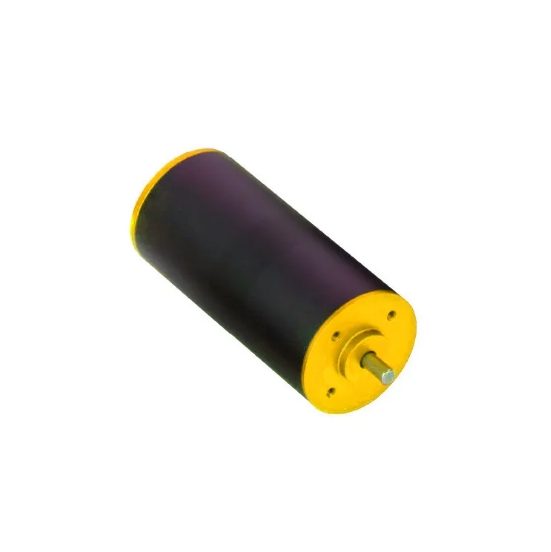
Efficiency Advantages from Structural Design
The high efficiency of BLDC motors is largely due to their optimized structure, which minimizes unnecessary energy losses found in traditional motors.
- Brushless design: Eliminating brushes and commutators avoids friction loss and sparking, allowing more direct and efficient energy conversion.
- Permanent magnet rotor: Magnetic fields are generated by permanent magnets, removing the need for additional excitation current and reducing energy consumption.
- Optimized magnetic circuit: A more uniform magnetic field distribution improves electromagnetic conversion efficiency.
Precise Control Through Electronic Commutation
Electronic commutation enables more refined energy management during motor operation.
- On-demand power supply: The controller delivers current precisely based on rotor position, reducing wasted power.
- Smooth current switching: Minimizes energy loss caused by current fluctuations and ensures stable operation.
- Fast response: Quickly adapts to load changes while maintaining high efficiency.
- Support for intelligent algorithms: Advanced control strategies help optimize performance and maximize energy efficiency.
Low Loss Characteristics During Operation
BLDC motors reduce various types of losses during operation, allowing more energy to be converted into useful output.
- Reduced copper loss: Optimized winding design improves current transmission efficiency.
- Lower iron loss: High-quality materials reduce hysteresis and eddy current losses.
- Minimal mechanical loss: The absence of brushes significantly reduces contact wear and friction.
Stable Efficiency Across Multiple Applications
BLDC motors maintain high efficiency not only under specific conditions but also across a wide range of applications.
- Wide efficient speed range: Maintains good efficiency at both low and high speeds.
- Strong load adaptability: Keeps stable performance even when load conditions change.
- Suitable for continuous operation: Efficiency remains stable during long working periods.
- System-level optimization: Works with control systems to further improve overall energy efficiency.
- High application flexibility: Widely used in drones, automation equipment, and smart home devices.
Through optimized structure, electronic control, and low-loss operation, BLDC motors achieve superior energy conversion efficiency. In real-world applications, this high efficiency not only reduces energy consumption but also improves system stability and user experience. For applications aiming to enhance performance while lowering operating costs, choosing BLDC motors provides reliable and long-lasting power support, helping products gain a stronger competitive advantage.