
In real-world applications of brushless DC motors (BLDC), motor selection is a critical step that determines overall system performance. Many users focus only on power or speed during selection, while overlooking key factors such as load characteristics, power supply capability, and control system compatibility. Improper selection can lead to reduced efficiency, increased heat, unstable operation, or even system failure. Whether it is industrial equipment, drones, RC models, or automation systems, proper motor selection is the foundation for stable long-term operation.
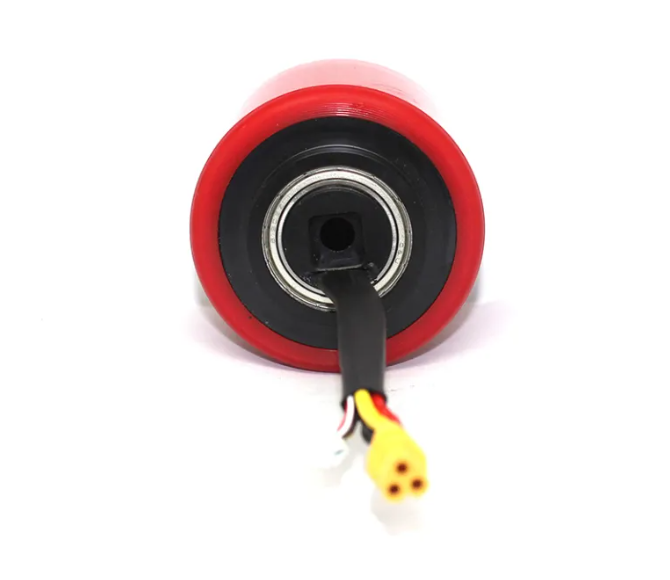
Key Motor Parameters You Must Understand
During BLDC motor selection, it is essential to understand the core parameters first, as they directly define performance characteristics, load capability, and application suitability, while also influencing the complexity of system design and tuning.
- KV rating determines speed characteristics and suitable applications; high KV suits high-speed low-torque use, while low KV is better for high-torque low-speed applications
- Torque defines load capacity and starting performance, directly affecting stability under working conditions
- Power rating indicates the overall output limit of the motor and must match real load requirements
- Voltage range defines the power supply compatibility and system design direction
How Different Applications Affect Motor Selection?
Different applications have significantly different performance requirements, so selection should not follow a universal standard. Instead, it must be based on real working conditions, operating patterns, and load variations.
- RC models prioritize fast response and high speed for acceleration performance
- Industrial systems focus on long-term stability, heat control, and reliability
- Drone systems emphasize balance between weight, efficiency, and endurance
- Automation systems require high precision and consistent low-speed performance
Impact of Power Supply and Control System on Selection
A motor does not operate independently; its performance depends heavily on the power supply and control system. Therefore, selection must consider the entire system rather than only the motor itself.
- Battery or power supply voltage directly affects motor speed and output capability
- ESC controller current rating determines stability and response under load
- Insufficient current capacity limits real performance output
- Control algorithms influence low-speed stability and dynamic response
Load and Mechanical Structure Matching Requirements
Motor selection must be aligned with real load characteristics and mechanical design, as different load types impose very different requirements on torque, speed, and transient response.
- Heavy-load systems require higher torque reserve to handle startup and impact loads
- Light-load high-speed systems are more suitable for high KV motors
- Gear reduction systems change final output speed and must be included in calculations
- Transmission efficiency losses must be considered in performance margins
Common Mistakes in Motor Selection
Many performance issues in real projects are not caused by motor quality but by incorrect selection decisions made during the early design stage, leading to system mismatch problems.
- Focusing only on power rating while ignoring torque matching, resulting in weak startup or insufficient load capacity
- Pursuing high speed without considering efficiency, causing excessive power consumption and heat
- Ignoring load variation, leading to unstable performance under dynamic conditions
- Overlooking thermal conditions, resulting in performance degradation during long operation
How to Improve Selection Accuracy?
To achieve stable and reliable system performance, selection must be based on multi-dimensional analysis rather than a single parameter. A systematic approach significantly reduces debugging time and improves efficiency.
- Clearly define load type and operating conditions, including continuous and peak loads
- Calculate required speed and torque range comprehensively
- Reserve sufficient performance margin for unexpected load changes
- Evaluate motor, controller, and power system as an integrated unit
The essence of brushless motor selection lies in system-level matching rather than single-parameter comparison. Only by considering motor performance, load requirements, power conditions, and control strategy together can stable and efficient operation be achieved. Incorrect selection often leads to performance waste or instability, while scientific selection significantly improves overall system efficiency and reliability. As a professional brushless power system manufacturer, X-TEAM provides a wide range of high-performance BLDC motor solutions widely used in industrial equipment, RC models, drones, and automation systems, helping customers achieve more precise and efficient power matching.