
As drones evolve from simple flying gadgets into professional tools, the requirements for their power systems continue to increase. Flight stability, endurance, and responsiveness are all closely related to motor performance. Among various motor types, BLDC motors have become the standard choice for drones. From consumer-grade aerial photography devices to industrial UAVs, this technology is widely adopted. The reason behind this is not just a trend, but a result of superior efficiency and performance.
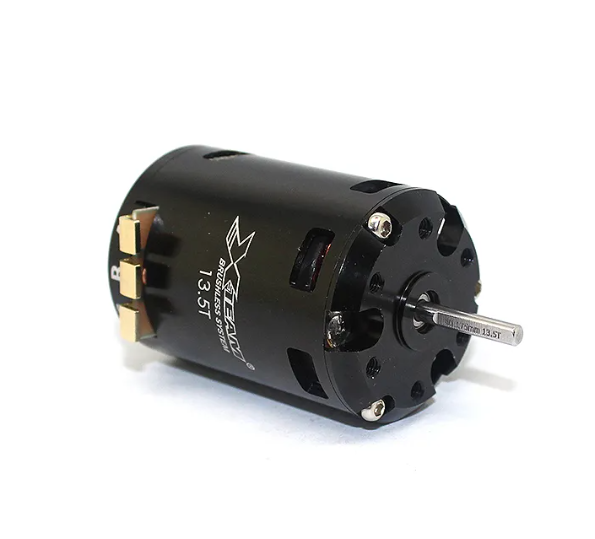
High Efficiency for Longer Flight Time
Since drones rely heavily on batteries, motor efficiency directly affects flight duration, making efficiency a key factor.
- Reduced energy loss: BLDC motors eliminate mechanical friction through electronic commutation, converting more electrical energy into useful thrust.
- Extended flight time: Higher efficiency allows drones to fly longer with the same battery capacity.
- Lower heat generation: Reduced losses result in lower operating temperatures, supporting longer and more stable flights.
- Improved overall energy efficiency: Enhanced motor efficiency leads to better system-level energy utilization.
High Speed and Strong Power Output
Drones require rapid thrust generation, placing high demands on motor speed and power.
- High-speed capability: BLDC motors can operate reliably at high RPM, meeting the needs of fast-spinning propellers.
- Stable thrust output: Smooth motor operation helps maintain stable flight conditions.
- Fast response: Quickly adjusts speed based on control signals for precise maneuvering.
- Adaptability to complex flight: Provides stable power during acceleration, hovering, and directional changes.
Lightweight and Structural Advantages
Weight is a critical factor in drone design, and motor size and weight directly affect performance.
- Compact and lightweight: BLDC motors have a small form factor, helping reduce overall drone weight.
- High power density: Delivers strong output power within a compact size, improving efficiency.
- Simplified structure: Brushless design reduces mechanical components, supporting lightweight construction.
Reliability and Low Maintenance
Drones cannot be frequently maintained during operation, making motor reliability essential.
- No brush wear: Eliminates mechanical contact wear, extending motor lifespan.
- Reduced failure risk: Avoids sparking and contact issues, improving operational stability.
- Suitable for long-duration use: Performs reliably in extended flight missions.
- Lower maintenance costs: Minimizes the need for part replacement.
- Adaptable to various environments: Maintains stable performance under different temperatures and working conditions.
BLDC motors have become the core choice for drone propulsion systems due to their high efficiency, high speed, lightweight design, and strong reliability. In practical applications, they not only enhance flight performance but also extend endurance and reduce maintenance costs. As drone technology continues to advance, the demand for high-performance power systems will keep growing, and BLDC motors will continue to provide stable and efficient support, enabling better performance and broader application possibilities.