
In many product descriptions, brushless motors are often labeled as “maintenance-free,” especially in drones, automation systems, and smart devices. This claim is widely accepted, but it is not entirely accurate in real-world applications. Compared with traditional brushed motors, brushless motors do eliminate a significant amount of mechanical wear, but under long-term operation or complex working conditions, there are still components that require attention. From a structural and operational perspective, they are better understood as low-maintenance and highly reliable motors rather than completely maintenance-free devices.
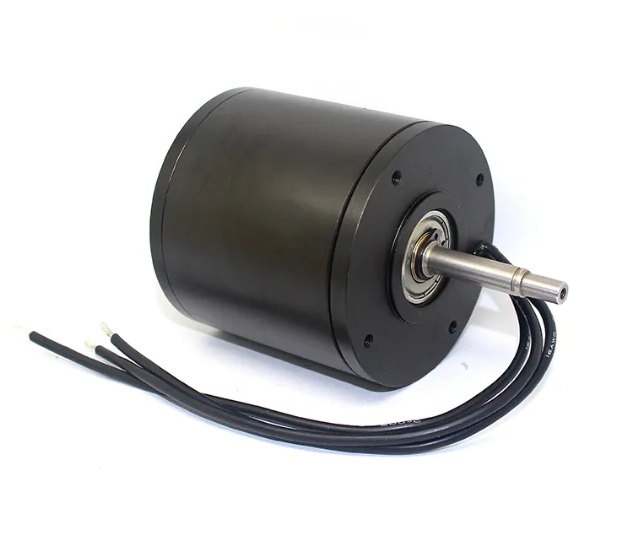
Why Brushless Motors Are Considered “Nearly Maintenance-Free”
The perception that brushless motors require little to no maintenance mainly comes from their structural advantages.
- No carbon brushes: Traditional motors rely on brushes for commutation, while brushless motors use electronic commutation, eliminating a major wear component.
- Reduced mechanical contact: Without a physical commutator system, internal friction is significantly reduced.
- More stable operation: A simpler structure means fewer failure points and more reliable performance under normal conditions.
- Longer service life: With fewer wearing parts, the overall lifespan is significantly extended compared to brushed motors.
Are Brushless Motors Truly Maintenance-Free?
Although brushless motors reduce core wear components, some factors still require attention during long-term use.
- Bearing wear still exists: Bearings are mechanical parts and may wear or become noisy after prolonged high-speed operation.
- Environmental impact: Dust, moisture, or oil contamination can affect cooling performance and internal cleanliness.
- Dependence on the drive system: Motor performance relies heavily on the controller; abnormal settings can affect overall stability.
- High-load operation stress: Continuous operation under high temperature or near-maximum load can accelerate performance degradation.
When Maintenance Is Still Necessary
Different application scenarios determine how often maintenance is required. The more demanding the environment, the more attention is needed.
- Industrial continuous-operation equipment: Systems running non-stop require periodic checks of temperature and operating condition.
- High-speed applications: Drones and high-speed fans require monitoring of vibration, balance, and noise changes.
- Harsh environments: Dusty, humid, or high-temperature conditions accelerate wear of bearings and internal components.
- Precision equipment: Even minor performance changes may require timely inspection in high-accuracy systems.
How to Reduce Maintenance Needs and Extend Lifespan
Proper usage and basic maintenance practices can significantly improve stability and service life.
- Control load levels: Avoid long-term overload operation and keep the motor within a reasonable working range.
- Improve cooling conditions: Ensure proper ventilation or add cooling solutions to reduce thermal stress.
- Regular bearing inspection: Monitor noise and vibration to detect early signs of wear.
- Optimize drive parameters: Proper controller settings help reduce current spikes and improve smooth operation.
- Maintain a clean environment: Reducing dust exposure helps maintain long-term internal stability.
Brushless motors do significantly reduce maintenance requirements compared to traditional motors, but they are not completely maintenance-free. In practical applications, they are more accurately described as low-maintenance and highly reliable power solutions. With proper usage, periodic inspection, and suitable operating conditions, their lifespan can be greatly extended while maintaining stable performance. For systems requiring long-term reliability and low operating costs, understanding these maintenance characteristics is more important than relying solely on the idea of being “maintenance-free.”