
Brushless DC motors (BLDC motors) are widely used in drones, power tools, smart appliances, and new energy equipment due to their high efficiency, low noise, and long service life. However, different applications require different levels of speed, torque, response time, and energy consumption. All of these performance characteristics are closely related to the motor’s parameters. Understanding how key parameters influence performance helps engineers select and design motors more accurately, improving overall system stability and efficiency.
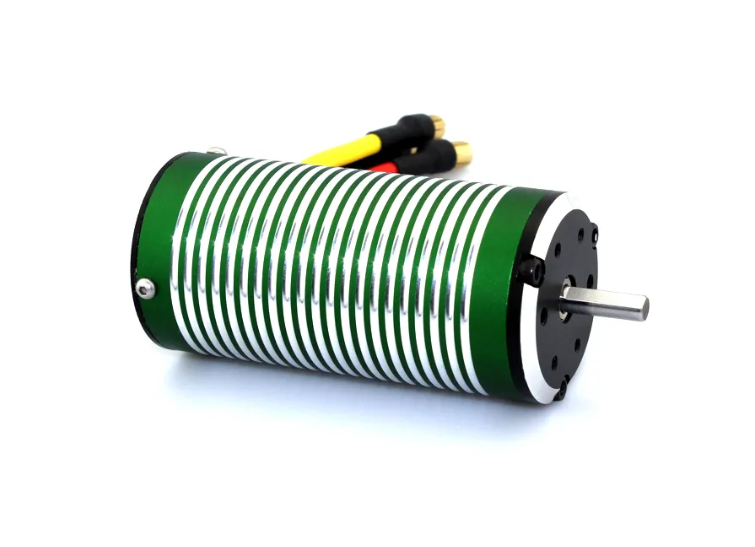
Kv Value (Speed Constant): Determines Speed Characteristics
The Kv value represents the no-load speed (RPM) per volt applied to the motor.
Higher Kv: higher speed, lower torque — suitable for lightweight, high-speed applications such as drone propellers or fans.
Lower Kv: lower speed, higher torque — suitable for heavy-load or frequent start-stop applications such as e-scooters or power tools.
Choosing a Kv value that is too high may lead to insufficient torque, while a Kv value that is too low may prevent the system from reaching the required speed.
Kt Value (Torque Constant): Determines Torque Output Capability
Kt indicates how much torque the motor can produce per ampere of current, and it is typically inversely related to Kv.
Higher Kt → greater torque (but lower maximum speed)
Lower Kt → weaker torque (but supports higher speed)
For systems that require strong startup performance or experience load fluctuations, a high-Kt motor offers better stability.
Phase Resistance (R): Affects Heating and Efficiency
Higher coil resistance increases current losses and heat generation.
Low-resistance motors are more efficient and produce less heat, suitable for long-duration operation such as AGV vehicles and compressors.
High-resistance motors heat up more easily at high current, reducing efficiency and potentially triggering thermal protection.
Selecting an appropriate phase resistance ensures stable operation under heavy loads.
Back-EMF Waveform: Affects Noise and Control Smoothness
BLDC motors typically have two types of back electromotive force (BEMF):
Trapezoidal BEMF: simpler drive, lower cost — used in fans, pumps, and similar devices.
Sinusoidal BEMF: smoother operation, lower vibration and noise — ideal for high-precision scenarios such as servos or high-end drones.
For applications that require quiet performance and low vibration, sinusoidal BEMF is the preferred choice.
Pole Count: Determines Torque Density and Maximum Speed
Motors with more poles deliver greater torque at low speeds and offer better control precision, but their top speed decreases.
High pole count: ideal for robotic joints, valves, or low-speed high-torque applications.
Low pole count: suitable for high-speed systems such as drone propulsion.
Choosing the correct pole count is crucial for achieving optimal efficiency.
Rated and Maximum Current: Determine Load Capacity
The amount of current a motor can safely handle directly affects its torque capability.
Maximum current determines peak torque capability.
Rated current determines sustainable operating torque.
Applications with frequent acceleration or heavy startup loads should prioritize motors with higher allowable current ranges to avoid overheating or demagnetization.
Bearing Type: Influences Lifespan and Smoothness
Bearing design affects durability, noise, and load handling:
Ball bearings: long life and strong load support; suitable for high-speed use.
Sleeve (oil-impregnated) bearings: low cost but unsuitable for sustained high-speed operation.
Although small, the bearing selection significantly impacts long-term reliability.
Conclusion
The performance of a brushless DC motor is determined by multiple key parameters, including Kv, Kt, phase resistance, BEMF waveform, pole count, current capability, and bearing type. Understanding how these factors influence speed, torque, heat generation, and efficiency allows engineers to make more accurate decisions during motor selection.
For developers seeking optimized performance, choosing the right BLDC parameters not only improves product quality but also reduces energy consumption and maintenance costs, providing greater long-term value.