
In applications such as underwater robots, ROVs, AUVs, and marine propulsion systems, motor selection directly affects propulsion efficiency, energy consumption, and overall system lifespan. One of the most common questions during the selection process is whether a high-speed motor or a low-speed motor is more suitable for an underwater thruster. In practice, neither option is universally better—the right choice depends on application requirements and system design. This article provides a practical guide to choosing between high-speed and low-speed motors for underwater thrusters.
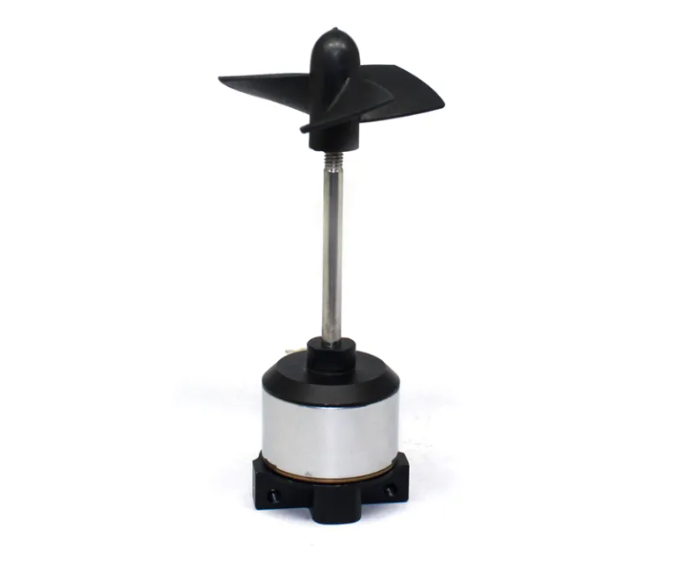
Basic Motor Requirements for Underwater Thrusters
The primary function of an underwater thruster is to convert motor output into stable thrust to overcome water resistance and enable movement, station keeping, or precise attitude control. Because water is much denser than air, underwater thrusters place higher demands on torque output, continuous operating stability, and sealing reliability.
Propulsion efficiency does not depend solely on rotational speed. Instead, it results from the combined matching of motor speed, propeller diameter, and blade pitch. For this reason, high-speed and low-speed motors serve different design objectives rather than representing a simple performance hierarchy.
Characteristics of High-Speed Motors in Underwater Thrusters
High-speed motors are typically characterized by high rated RPM and high power density. Their compact size and low weight make them well suited for space-constrained systems such as small ROVs and portable underwater devices.
When paired with reduction gearboxes or small-diameter propellers, high-speed motors can build thrust quickly and offer fast response times. This makes them suitable for applications that require frequent maneuvering or rapid acceleration.
However, higher rotational speeds place greater demands on bearings, seals, and thermal management. Increased mechanical stress and sealing load can shorten service life if design quality or maintenance standards are insufficient.
Characteristics of Low-Speed Motors in Underwater Thrusters
Low-speed motors are defined by lower rated RPM and higher torque output. They are often capable of directly driving large-diameter propellers without the need for reduction mechanisms, resulting in a simpler and more robust system architecture.
For applications requiring long-duration and stable operation, low-speed motors offer clear advantages. Deep-sea observation, underwater inspection, and station-keeping tasks benefit from steady thrust, improved energy efficiency, and reduced noise and vibration.
The trade-off is typically increased motor size and weight, which may influence overall system layout and buoyancy design.
Practical Comparison for Motor Selection
Motor selection should be based on specific operational priorities.
When compact size, agility, and rapid response are critical, high-speed motors are often the preferred solution, especially when combined with optimized propeller designs or gear reduction systems.
When long-term reliability, continuous operation, and stable thrust output are the primary goals, low-speed, high-torque motors tend to provide better performance and lower maintenance risk.
From an efficiency perspective, low-speed motors driving large propellers generally achieve higher propulsion efficiency for the same thrust level, while high-speed motor solutions offer greater flexibility in compact system designs.
System-Level Matching Considerations
In underwater thruster systems, motor speed is only one of many design parameters. Effective selection requires evaluating the entire system, including propeller geometry, power supply, motor control strategy, and cooling conditions.
Environmental factors such as operating depth, water temperature, and water quality must also be considered. High-speed systems are more sensitive to sealing and bearing integrity, while low-speed systems demand robust structural strength and consistent torque output.
Conclusion
Choosing between high-speed and low-speed motors for underwater thrusters is fundamentally a balance between responsiveness, system complexity, efficiency, and long-term reliability. There is no universally optimal solution. By clearly defining operational requirements and evaluating real-world working conditions, designers can select the most appropriate motor configuration and ensure stable, efficient performance throughout the system’s service life.