
In practical BLDC motor applications, many users focus first on power and size while overlooking the importance of speed selection. In fact, motor speed not only affects operating efficiency but also directly influences torque output, energy consumption, and overall stability. Different applications have very different speed requirements—for example, drones require high-speed response, while industrial equipment focuses more on stable low-speed output. Therefore, selecting the proper BLDC motor speed is essential for improving equipment performance and lifespan. Only by analyzing actual working conditions can the most suitable solution be found.
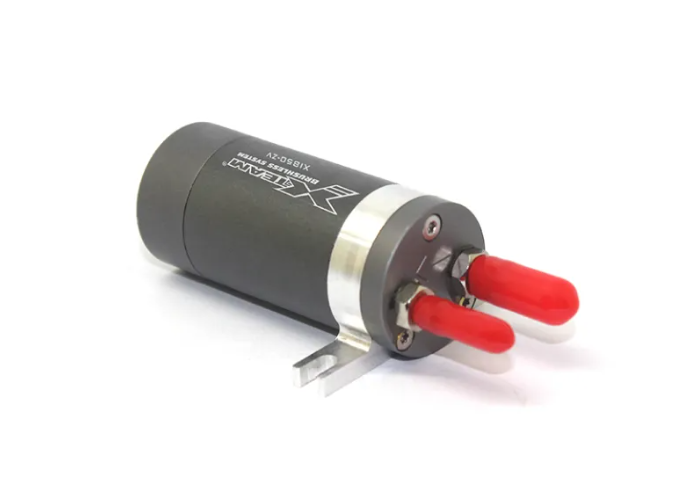
Understand the Actual Application Requirements First
Before selecting motor speed, it is important to understand the operating characteristics of the equipment itself.
- Analyze the application scenario: Different devices such as fans, robots, and drones have completely different speed requirements.
- Confirm load type: Constant loads and sudden loads require different speed matching strategies.
- Consider operating mode: Equipment designed for continuous operation usually benefits from stable speed solutions.
- Evaluate startup requirements: Some devices require higher startup speed to quickly reach operating condition.
Relationship Between Speed and Torque
Speed and torque are two critical parameters that must be balanced during motor selection.
- High speed usually means lower torque: Suitable for high-speed and light-load applications.
- Low speed provides higher torque more easily: Better for heavy-load and industrial drive systems.
- Avoid parameter imbalance: Focusing only on speed may result in insufficient driving force.
- Use reduction systems properly: Gear reducers can help achieve more ideal output performance.
- Match with actual load calculations: Ensure both speed and torque meet application demands.
Influence of KV Rating on Speed Selection
In BLDC motors, the KV value is an important reference parameter for speed capability.
- Higher KV means higher speed: Suitable for drones, high-speed fans, and similar applications.
- Lower KV is better for high torque output: Commonly used in robotics and industrial systems.
- Match with supply voltage: Actual motor speed changes under different voltage conditions.
- Do not rely only on no-load speed: Real performance under load is more important.
How to Balance Efficiency and Lifespan?
Proper speed selection affects not only performance but also long-term operational reliability.
- Avoid continuous overspeed operation: Excessive speed increases heat and wear.
- Pay attention to cooling capability: High-speed operation requires stronger heat dissipation design.
- Improve operating efficiency: Running the motor within its efficient range reduces energy consumption.
- Leave a reasonable safety margin: Avoid operating continuously at maximum speed limits.
- Optimize with control systems: Advanced drive algorithms can provide smoother operation.
Choosing the speed of a BLDC motor is not simply about selecting the highest possible RPM. Instead, it requires balancing load, torque, efficiency, and application requirements. Only with proper speed matching can the advantages of BLDC motors—high efficiency, fast response, and stable operation—be fully realized. As drones, robotics, industrial automation, and smart devices continue to evolve, scientific motor speed selection will become an increasingly important factor in improving product performance and market competitiveness.