
In industrial and automation applications, Sensored Motors are widely favored for their precise speed control and rapid response. However, after long-term operation, users may notice that the motor becomes increasingly noisy, sometimes accompanied by vibration or reduced performance. These issues often have multiple underlying causes. This article explains the common reasons for excessive noise in sensored motors and provides practical troubleshooting methods to help engineers quickly identify and resolve problems, ensuring stable and quiet operation.
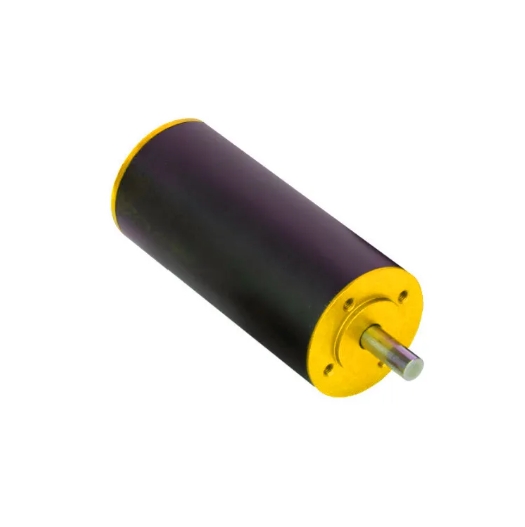
Main Sources of Motor Noise
Noise in sensored motors generally falls into three categories: mechanical noise, electromagnetic noise, and aerodynamic noise.
Mechanical noise is usually caused by bearing wear, rotor imbalance, or loose installation.
Electromagnetic noise comes from uneven current distribution, asymmetric magnetic fields, or variations in the stator air gap.
Aerodynamic noise results from air turbulence generated during high-speed rotation.
Identifying which type of noise is present is the first key step in effective troubleshooting.
Bearing Wear or Poor Lubrication
Bearing problems are one of the most common causes of abnormal motor noise. When lubrication is insufficient or has not been replaced for a long time, metal-to-metal contact occurs, producing harsh friction sounds.
Solutions:
Check the bearing lubrication and add or replace grease as needed.
Inspect bearing clearance—replace if excessive play is detected.
Ensure the motor shaft is not bent or misaligned to prevent uneven loading.
Regular maintenance and proper lubrication can significantly extend bearing life and reduce noise levels.
Rotor Imbalance or Loose Installation
If the rotor is unbalanced or the coupling is not securely mounted, the motor may generate periodic vibration and mechanical noise.
Recommended actions:
Use a dynamic balancing instrument to recalibrate the rotor.
Check for loose bolts or mounting bases and tighten them.
Perform a coaxiality inspection between the motor and load to avoid shaft misalignment.
Proper installation and structural stability are fundamental to minimizing vibration-induced noise.
Uneven Air Gap Between Stator and Rotor
An uneven air gap can cause asymmetric magnetic flux, resulting in electromagnetic hum during operation.
Troubleshooting tips:
Verify that the stator core is properly centered within the housing.
Measure rotor shaft eccentricity to confirm uniform air gap distribution.
Inspect winding integrity to eliminate short circuits or loose coils that disturb the magnetic balance.
Improper Drive Parameter Settings
In sensored motor systems, inappropriate drive settings (such as PWM frequency, phase angle, or speed loop gain) can produce noise and torque ripple.
Optimization suggestions:
Switch the drive to sinusoidal or FOC (Field-Oriented Control) mode for smoother output.
Check Hall sensor signals for abnormalities that might cause phase misalignment.
Use an oscilloscope to monitor current waveforms and ensure stable current control.
Proper parameter tuning ensures the drive and motor operate harmoniously, minimizing electromagnetic interference and noise.
Environmental Influences
The motor’s working environment—such as temperature, humidity, and mounting surface—can also affect noise performance.
Install the motor on a solid, level base away from other vibration sources. Maintain adequate ventilation to prevent overheating, which may cause component expansion and increase operational noise.
Conclusion
Although excessive noise in sensored motors can arise from various factors, most problems can be prevented through regular maintenance, precise diagnostics, and proper control settings. For high-performance systems, it is recommended to use professional diagnostic tools—such as vibration analyzers or noise meters—for periodic inspections. This proactive approach ensures your motor remains stable, quiet, and efficient throughout its service life.