
In motor technology, motors not only provide power to drive equipment but can also perform reverse energy conversion under certain conditions. Brushless DC motors, widely used in drones, automation systems, and intelligent devices, are common drive components in modern equipment. Many people studying BLDC motor knowledge wonder whether brushless DC motors can also function as generators. In fact, due to their structural similarity to permanent magnet motors, when driven by an external mechanical force, they can generate electrical energy, converting mechanical energy into electrical energy, and can serve as generators in certain applications.
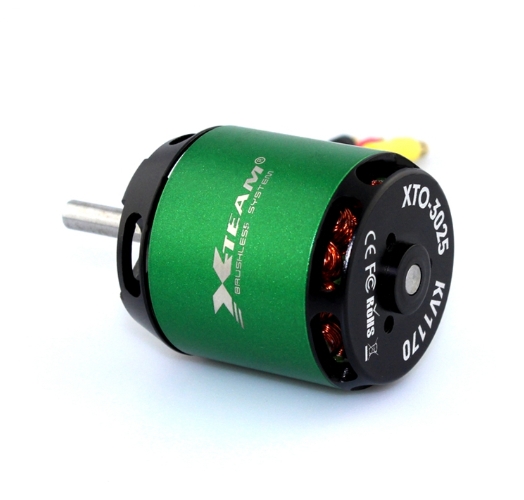
Principle of Using a Brushless DC Motor as a Generator
Brushless DC motors feature a permanent magnet rotor and multi-phase stator windings, allowing them to produce electricity when mechanically driven. Their operation relies on electromagnetic induction.
- Rotor magnetic field effect: The rotor of a brushless DC motor is typically equipped with permanent magnets. When external mechanical force drives the rotor to rotate, the magnetic field of the rotor continuously changes.
- Induced voltage in stator coils: As the rotor rotates, its changing magnetic field cuts through the stator windings, generating an induced voltage.
- Current output forming electrical energy: When the stator windings are connected to a load or circuit, the induced voltage produces current, converting mechanical energy into electrical energy.
- Electronic rectification and control: In practical applications, a rectifier or controller is often used to regulate the output voltage and ensure stable electrical energy output.
Operating Method of a Brushless DC Motor as a Generator
In practice, if a brushless DC motor is driven by an external mechanical system, such as a wind turbine, mechanical transmission, or rotating equipment, it can generate voltage in the stator windings. As the permanent magnets in the rotor rotate, the magnetic field direction continuously changes, causing the magnetic flux in the stator windings to vary, which induces voltage.
In some systems, the motor and controller can work together to enable both driving and generating modes. For example, during deceleration or braking, the motor can recover energy by converting mechanical energy into electrical energy, which can be reused, improving overall system efficiency.
Application Characteristics of Brushless DC Motors as Generators
With the development of motor control technology, brushless DC motors are increasingly used in certain generation scenarios and show distinct advantages.
- Compact structure: Brushless DC motors are relatively small, making them suitable for devices with limited space or small-scale generator systems.
- High efficiency: The permanent magnet rotor structure reduces energy loss and can maintain good generation efficiency under proper conditions.
- Low maintenance requirements: Without brushes, these motors experience minimal wear even in generation mode, reducing maintenance needs.
- Flexible application scenarios: Brushless DC motors can be applied in small generators, wind power systems, and energy recovery systems.
When a brushless DC motor is mechanically driven, the rotor’s permanent magnets create a magnetic field that continuously cuts through the stator windings, generating induced voltage and producing electrical energy. This design allows the motor not only to provide mechanical drive but also, under suitable conditions, to serve as a generator. In small generator systems, energy recovery setups, and specialized drive devices, this feature of brushless DC motors offers additional application possibilities.