
As devices continue to evolve, motor performance has become a key factor influencing product competitiveness. From smart appliances to industrial automation equipment, power systems are expected to be stable, efficient, and long-lasting. Brushless DC motors and brushed motors are two mainstream options widely used across various applications. When selecting a motor, many users face the same question: which one is better? In reality, there is no absolute answer—the right choice depends on specific application needs. By comparing their structure, performance, maintenance, and application scenarios, it becomes easier to make a well-informed decision and achieve a balance between cost and performance.
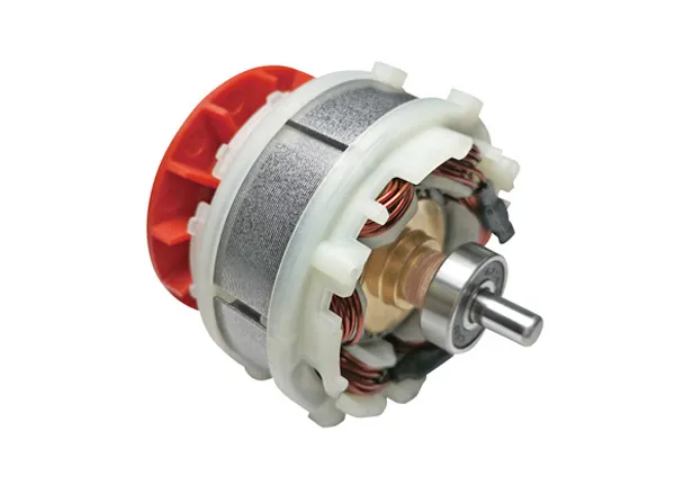
Structural and Operating Differences
The structural differences between these two motor types fundamentally affect their performance and user experience.
- Brushed motors rely on carbon brushes and commutators for mechanical commutation, offering a simple structure and easy control, but generating friction and sparks during operation; in contrast, brushless DC motors use electronic commutation, eliminating physical contact and reducing wear at the source.
- Brushed motors are easier to manufacture and control, making them suitable for applications with lower control requirements; brushless motors require controllers, increasing system complexity but enabling more precise speed and torque control with better overall performance.
Efficiency and Performance Differences
In real-world applications, the gap in efficiency and performance between the two types is significant and directly impacts system behavior.
- Brushed motors suffer energy losses due to brush friction and sparking, while brushless motors reduce these losses through electronic commutation, allowing more efficient energy conversion.
- Brushed motors are typically used in medium- to low-speed applications with limited responsiveness, whereas brushless motors support a wider speed range and faster dynamic response, making them ideal for high-performance scenarios such as drones, power tools, and automation systems.
Maintenance and Lifespan Comparison
From a long-term perspective, maintenance requirements and lifespan play a crucial role in overall cost and reliability.
- Brushed motors require periodic replacement of carbon brushes, which increases maintenance frequency; brushless motors eliminate this need, significantly reducing maintenance.
- Brushed motors tend to experience performance degradation over time due to mechanical wear, resulting in a shorter lifespan; brushless motors, with reduced friction, offer greater durability and more stable long-term performance.
Application Scenarios and Selection Advice
Different applications have different requirements, and choosing the right motor helps maximize performance and value.
- For cost-sensitive applications with low usage frequency, brushed motors remain a practical choice; for applications requiring high efficiency, performance, and stability, brushless DC motors are more suitable.
- In systems requiring precise control, intelligent speed regulation, or continuous operation, brushless motors are the better option, such as in industrial automation, smart appliances, and unmanned systems; for simpler control needs, brushed motors can meet basic requirements at a lower cost.
Brushless DC motors and brushed motors each have their own strengths in terms of structure, efficiency, and usage characteristics. As technology advances and demand for high-performance equipment grows, brushless motors are being adopted in more applications due to their advantages in efficiency, low maintenance, and long lifespan. Meanwhile, brushed motors still hold value in cost-sensitive and simple-use scenarios. Selecting the right motor based on actual needs helps optimize performance while maintaining cost efficiency, ensuring stable and reliable operation over time.