
During FPV drone flights, many pilots notice a sharp, high-pitched squealing sound coming from the motors, especially at low throttle or during smooth cruising. This sound can be annoying and often raises concerns about motor quality or potential failure. In reality, FPV motor squealing does not always indicate a defect. In most cases, it is closely related to ESC drive frequency settings and the condition of the motor magnets.
Understanding the underlying causes helps pilots make better tuning decisions and avoid unnecessary motor replacements.
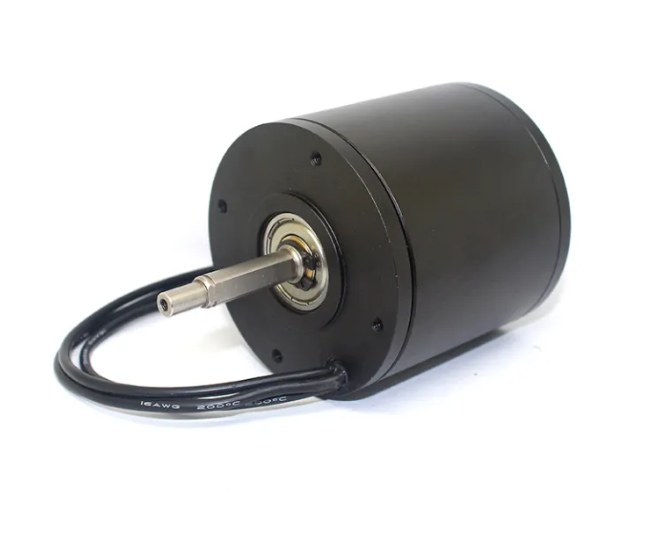
What Is FPV Motor Squealing?
Motor squealing usually appears as a high-frequency, continuous, and tonal sound. It is different from normal airflow noise or mechanical vibration. This noise is often most noticeable at low RPM, light load, or during rapid throttle changes, especially in quiet environments.
From a technical perspective, squealing is the result of electromagnetic vibration interacting with the motor’s mechanical structure.
Drive Frequency Mismatch as a Primary Cause
FPV motors are driven by Electronic Speed Controllers (ESCs), which regulate current flow through the motor windings using PWM or digital signals. Improper drive frequency settings are one of the most common reasons for motor squealing.
When the ESC switching frequency is set too high, the rapid current changes generate stronger electromagnetic forces inside the stator. These forces cause the stator laminations and windings to vibrate at high frequency. If this vibration falls within the audible range of human hearing, it manifests as a sharp squealing sound.
Different motors respond differently to drive frequencies. Motors with different KV ratings, stator sizes, and winding designs each have their own “comfort zone.” When the ESC frequency does not match the motor’s characteristics, noise can occur even if the motor itself is functioning normally.
Digital Protocols and Filtering Effects
Modern ESCs often use digital protocols such as DShot, which typically operate with higher internal switching frequencies. While this improves throttle response and control precision, it can also amplify electromagnetic vibration.
If ESC or flight controller filtering is insufficient, high-frequency vibrations may not be properly damped. As a result, the motor produces audible squealing. This explains why adjusting ESC parameters or filters can sometimes significantly change motor noise behavior.
Magnet Issues as Another Major Factor
Beyond drive frequency, motor magnet condition plays a critical role in squealing noise. The magnets are a core component of a brushless motor, and their alignment and stability directly affect electromagnetic balance.
If magnets become slightly loose, misaligned, or if the adhesive degrades over time, the rotor may lose perfect balance during rotation. This imbalance increases vibration and amplifies electromagnetic forces, making squealing more pronounced.
Heat exposure and prolonged high-load operation can also alter magnet performance. Changes in magnetic strength or uniformity may cause uneven magnetic fields, contributing to abnormal noise.
Magnet Alignment and Manufacturing Tolerance
In some lower-cost or older motor designs, magnet spacing and placement accuracy may be inconsistent. Uneven magnet gaps create fluctuating magnetic forces as the rotor spins, producing periodic vibration that is easily heard as squealing.
In these cases, software tuning alone may have limited effect, because the noise originates from the motor’s physical structure rather than ESC configuration.
Does Squealing Mean the Motor Is Failing?
It is important to note that motor squealing does not automatically indicate damage or imminent failure. If the motor spins smoothly, stays cool, delivers stable thrust, and draws normal current, mild squealing is usually acceptable.
However, attention is required if squealing is accompanied by symptoms such as excessive heat, rough rotation, increased current draw, or in-flight oscillation. These signs may indicate magnet issues or internal mechanical problems that could worsen over time.
How to Reduce FPV Motor Squealing
Motor squealing can often be reduced by adjusting ESC drive frequency to better match the motor’s characteristics. Small changes in PWM frequency may significantly lower audible noise.
Inspecting motors for loose magnets and avoiding prolonged high-temperature operation also helps maintain magnet stability. When selecting motors, build quality, magnet fixation method, and machining precision are more important than KV rating alone.
Conclusion: Understanding the Noise Leads to Better Decisions
Overall, FPV motor squealing is most commonly caused by drive frequency settings and magnet-related factors, rather than outright motor defects. Understanding the electromagnetic and mechanical mechanisms behind the noise allows pilots to tune their setups more effectively and judge motor health more accurately.
As long as the motor operates smoothly and remains within normal temperature and current limits, mild squealing is unlikely to affect flight safety or performance.