
In the design and upgrading of various devices, BLDC motors have become a preferred power solution for many engineers and product developers. However, in actual selection processes, insufficient understanding of performance parameters or incorrect judgment of application scenarios often leads to common mistakes. These mistakes can result in poor performance, higher costs, and increased maintenance difficulties. To fully leverage the advantages of BLDC motors, careful selection is essential. Avoiding these misconceptions is the key to ensuring stable and efficient motor performance in real-world applications.
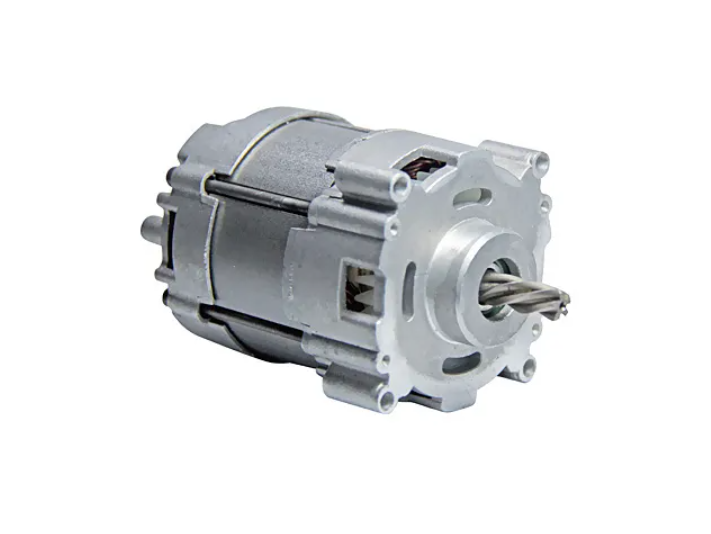
Focusing Only on Power and Ignoring Torque Requirements
During selection, many users tend to rely solely on power ratings while overlooking the more critical factor of torque matching.
- Power does not equal performance: Relying only on power can lead to mismatched selection and poor system performance.
- Insufficient torque leads to failure under load: Even with adequate power, lack of torque may prevent proper operation.
- Ignoring startup conditions: Startup requires higher torque rather than just rated power.
- Different application demands: Various devices require different torque curves and cannot be generalized.
Ignoring Controller Compatibility
The performance of a BLDC motor depends not only on the motor itself but also heavily on the control system.
- Motor-driver mismatch: Incorrect controller parameters can significantly affect performance.
- Overlooking control algorithm differences: Different control methods have a major impact on motor behavior.
- Communication and compatibility issues: Interface mismatches may lead to reduced efficiency or system failure.
- Neglecting system-level design: Focusing only on the motor often ignores the overall drive solution.
Assuming Higher Efficiency Is Always Better
Many users prioritize maximum efficiency without considering whether it fits the actual application needs.
- High efficiency is not always optimal: The best efficiency range depends on operating conditions.
- Light-load vs heavy-load differences: Some motors perform less efficiently under light load.
- Cost-performance imbalance: Pursuing extreme performance can increase unnecessary costs.
- Real-world vs lab conditions: Test data may differ significantly from actual operating environments.
Ignoring Heat Dissipation and Operating Environment
The operating environment plays a crucial role in motor performance and lifespan, yet it is often overlooked.
- High temperature affects performance: Poor cooling reduces efficiency and may cause damage.
- Enclosed spaces limit cooling: Improper installation can lead to overheating.
- Dust and humidity impact reliability: Harsh environments shorten motor lifespan.
- Continuous high-load operation: Requires stronger thermal management design.
- Incorrect protection rating selection: Choosing the wrong IP rating can lead to failures in real use.
BLDC motor selection is not as simple as it may seem. It involves multiple factors such as power, torque, control systems, and operating environments. Common mistakes are often not isolated parameter errors but rather results of incomplete system understanding. Only by considering real application scenarios and evaluating all key factors can the most suitable motor be selected. With proper selection, BLDC motors can fully deliver their advantages in efficiency, durability, and stable operation, providing reliable power support for various applications.