
In today’s rapidly evolving motor technology landscape, efficiency has become one of the most important performance indicators for power systems. From industrial equipment and drones to smart home appliances, brushless motors are increasingly replacing traditional brushed motors. This shift is not accidental but the result of differences in structure, energy loss, and control methods. When selecting a motor, one key question often arises: why are brushless motors more efficient? To answer this, we need to analyze both internal working mechanisms and real-world operating performance.
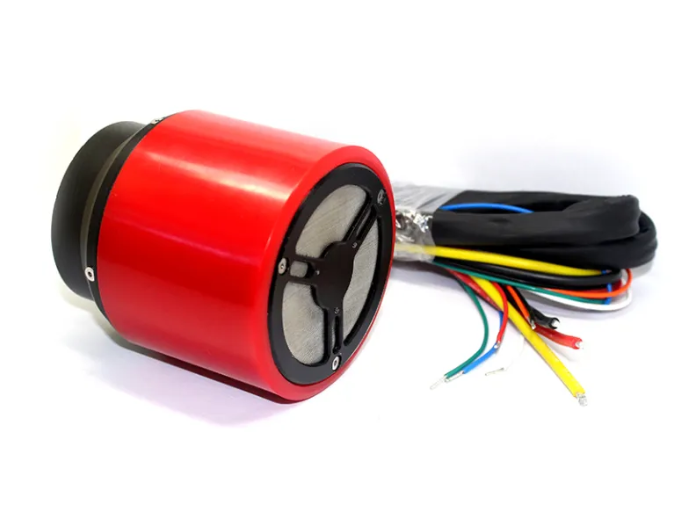
Structural Differences Determine Energy Loss
The fundamental difference in structure between the two motor types is the root cause of efficiency variation.
- No carbon brushes: Brushless motors use electronic commutation instead of mechanical brushes, eliminating continuous friction losses found in brushed motors.
- Fewer mechanical contact points: With no constantly rubbing components, energy loss is significantly reduced from the source.
- Lower electrical and sparking losses: Brushed motors generate electrical sparks and contact resistance during commutation, wasting additional energy.
- Simpler structure: Brushless motors have a more direct energy transfer path, improving overall efficiency.
Electronic Commutation Improves Operating Efficiency
Brushless motors rely on electronic control for commutation, allowing more precise energy delivery.
- Precise current control: The controller adjusts current based on rotor position, avoiding unnecessary power consumption.
- Reduced energy spikes: Smooth electronic switching minimizes losses caused by sudden current changes.
- Optimized operating cycle: Output can be dynamically adjusted based on load conditions for better efficiency.
- Faster response: The system quickly adapts to speed changes, improving energy utilization.
Lower Operational Losses
In real operation, brushless motors demonstrate significantly reduced losses across multiple aspects.
- Reduced friction loss: The absence of brushes eliminates continuous mechanical wear.
- Lower heat generation: Less wasted energy results in lower operating temperatures.
- Higher electrical conversion efficiency: More electrical energy is converted into useful mechanical output.
- Extended high-efficiency range: Maintains strong efficiency across different speed levels.
System Integration and Long-Term Efficiency Advantages
Brushless motors not only perform better individually but also offer system-level benefits.
- Compatible with smart control systems: Works with electronic speed controllers for optimized performance.
- Wide load adaptability: Maintains efficiency under both light and heavy loads.
- Better long-term performance: Efficiency degradation is lower over extended use.
- Reduced overall energy cost: Improves system-wide energy consumption efficiency.
- Suitable for high-performance applications: Widely used in drones, industrial systems, and advanced drive applications.
The reason brushless motors are more efficient than brushed motors lies in their structural optimization and electronic control advantages. From reduced mechanical losses to improved energy utilization and intelligent control methods, every aspect contributes to higher efficiency. In real-world applications, this advantage not only reduces energy consumption but also improves stability and extends service life. For applications requiring high performance and reliability, brushless motors have become a more competitive and future-oriented power solution.