
In the European underwater equipment market, German underwater thrusters are widely recognized for their strong stability, long service life, and reliable performance even in extreme environments. Compared with the open-style brushless motor designs commonly seen in other countries, German manufacturers overwhelmingly prefer potting motors, which dominate applications in underwater robots, AUVs, ROVs, research platforms, and industrial-grade thrusters.
Why are potting motors so popular in Germany’s underwater industry? This article explains the reasons from the perspectives of structural reliability, seawater resistance, maintenance cost, and safety.
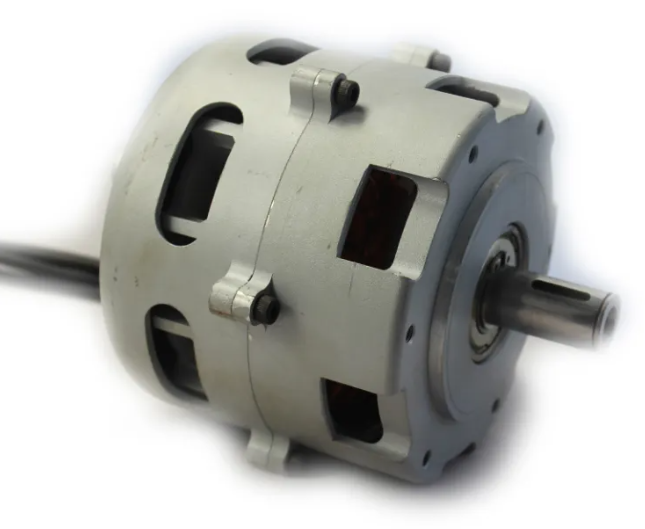
Harsh German marine conditions demand highly stable motors
Germany’s surrounding seas—the North Sea and the Baltic Sea—are cold, saline, and dynamically complex. Such environments place strict demands on insulation and structural durability.
Potting motors use epoxy resin to encapsulate the windings, electronics, and sensitive components, creating a fully sealed, air-free internal structure. This offers major advantages:
No condensation issues in cold water
Saltwater cannot enter the windings
Long-term immersion will not cause corrosion-related failures
For long-term ocean deployments, potting technology significantly reduces failure rates, fitting Germany’s engineering philosophy of “maximum reliability over time.”
Superior shock and pressure resistance
German AUVs and deep-sea equipment are often used for geological surveys, marine observation, and infrastructure inspections, requiring motors that withstand:
High hydrostatic pressure
Continuous vibration
Impact loads
Pressure cycling inside thruster housings
A potting motor behaves like a “solid-state motor unit.” With no cavities or trapped gases, it naturally resists:
Higher static pressure
Rapid temperature changes
Pressure fluctuations at depth
Compared with open motors using oil-filling and O-rings, potting motors offer superior pressure stability, making them the preferred option for German deep-sea missions.
Lower maintenance—core to German industrial design
German engineering values low maintenance, long lifespan, and high reliability.
Potting motors are highly integrated, with:
No exposed windings
No oil seals to replace
No risk of leakage into internal cavities
The result is:
Less routine servicing
No oil changes
Extremely low risk of water ingress
Higher long-term operational reliability
For companies, research institutions, and offshore engineering contractors, lower maintenance costs directly translate to reduced downtime—exactly what German industries prioritize.
Higher electromagnetic efficiency for high-performance thrusters
The compact, solid design of a potted motor stabilizes the air gap and improves thermal pathways, leading to:
Higher copper fill factor
Reduced electrical resistance
Better heat dissipation
More linear and efficient thrust output
German thrusters are widely used in long-range AUVs, industrial ROVs, and underwater mapping systems—applications where efficiency and stability are critical. Potting motors naturally fulfill these requirements.
Compliance with Germany’s demanding industrial and safety standards
Germany enforces strict standards across offshore engineering, energy, communications, and defense sectors.
Potting motors inherently align with these regulations:
High insulation and safety
Zero oil-leak risk—environmentally friendly
Lower failure probability for mission-critical systems
Higher electrical reliability
Given this industrial culture, potting motors have become the mainstream solution.
Conclusion
Germany’s widespread use of potting motors in underwater thrusters is no coincidence. It reflects a deep commitment to reliability, pressure resistance, safety, and low maintenance. Potting technology performs exceptionally in harsh seas such as the North Sea and Baltic Sea, perfectly matching Germany’s needs in marine engineering, research, and industrial operations.
For users aiming to build high-grade underwater propulsion systems, potting motors are the option that best embodies German standards.