
In modern industrial automation and intelligent equipment, brushless DC motors (BLDC) are widely used due to their high efficiency, low maintenance, and reliability. However, BLDC motors can be divided into sensored BLDC (with sensors) and sensorless BLDC (without sensors) depending on whether rotor position sensors are used. Choosing the right type of motor affects not only device performance but also control costs, stability, and suitability for specific applications. This article explores the characteristics of sensored and sensorless BLDC motors and provides guidance to help engineers make informed decisions.
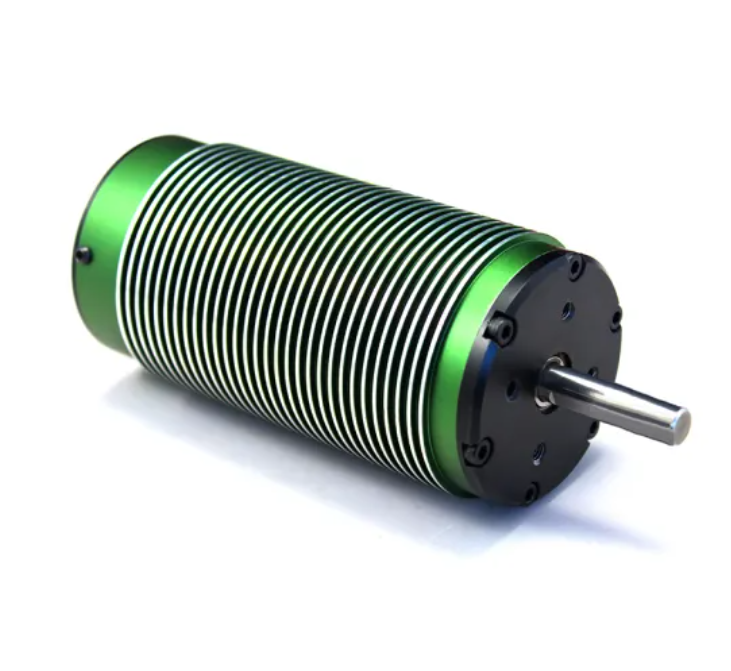
Features and Advantages of Sensored BLDC Motors
- Precise Startup and Low-Speed Control
Sensored BLDC motors are equipped with Hall sensors or encoders to detect rotor position in real time, enabling smooth startup and stable low-speed operation.
- High-Performance Speed Control
With precise position feedback from sensors, the motor maintains high efficiency across the full speed range and responds quickly, making it ideal for applications requiring high precision.
- Strong Torque Output
Accurate commutation timing allows sensored BLDC motors to deliver higher torque during startup and low-speed operation, suitable for equipment with heavy starting loads.
- Stable and Reliable Control
In scenarios with frequent start-stop cycles or variable loads, sensored BLDC motors provide stable control, reducing vibration, jitter, or step-out risks.
Features and Applications of Sensorless BLDC Motors
Sensorless BLDC motors estimate rotor position using back electromotive force (Back EMF) without physical sensors, resulting in a simpler structure.
They are advantageous in cost-sensitive, space-constrained, or high-speed applications. Without sensors and wiring, these motors can be smaller, lighter, and more reliable. Common uses include fans, pumps, and high-speed rotary tools. Sensorless BLDC motors operate steadily at medium to high speeds, making them suitable for long-duration continuous operation.
Selection Guide: How to Choose Between Sensored and Sensorless BLDC
- High Startup Torque or Low-Speed Requirement
Applications such as robotic joints, medical pumps, and precision instruments benefit from sensored BLDC motors, which provide smooth startups and high torque at low speeds.
- Cost-Sensitive or High-Speed Applications
For fans, power tools, or high-speed cooling devices, sensorless BLDC motors reduce sensor cost and wiring complexity while delivering excellent high-speed performance.
- Control Complexity
Sensored BLDC motors require controllers to read sensor signals, making the control logic more complex but offering higher speed accuracy. Sensorless BLDC motors have simpler control circuits, which is advantageous for mass production and maintenance.
- Load Characteristics
Equipment with frequently changing or intermittent loads is better suited for sensored BLDC motors, while machines with stable, continuous loads can use sensorless BLDC motors.
Sensored and sensorless BLDC motors each have unique advantages. Selecting the appropriate type should consider startup speed, load characteristics, cost, and control complexity. Sensored BLDC motors are ideal for low-speed, high-precision, high-torque, and frequent-start applications, while sensorless BLDC motors are suitable for high-speed, continuous, compact, and cost-sensitive environments. Understanding the characteristics and applications of both types helps engineers optimize performance and cost-efficiency, providing stable and efficient power solutions for a wide range of equipment.