
When choosing a motor for RC models, many hobbyists notice one key parameter: the KV rating. Beginners often ask: What exactly is KV? Do I really need to understand it when playing with RC cars, boats, or drones? And what is the relationship between KV and torque?
This article explains the role of KV and torque in RC motors from a practical, real-world perspective.
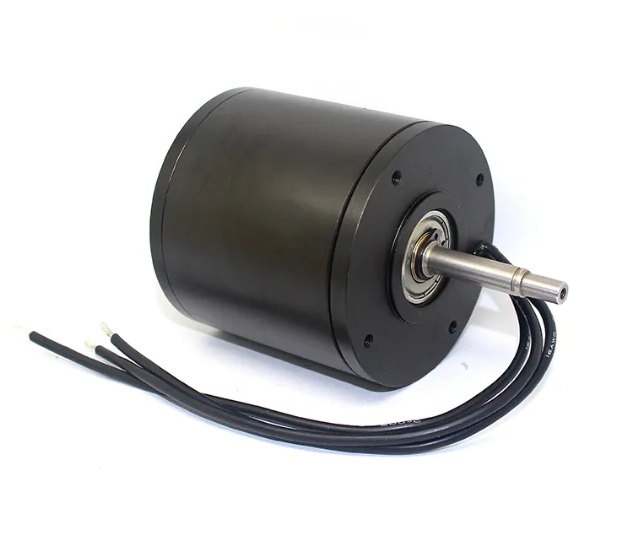
What Is the KV Rating of a Motor?
KV is not a unit of power. It refers to the motor speed constant, which indicates how many revolutions per minute (RPM) the motor produces for every 1 volt applied under no-load conditions.
For example:
A 1000KV motor theoretically reaches about 10,000 RPM at 10V
A 3000KV motor can reach around 30,000 RPM at the same voltage
It is important to understand that a higher KV does not automatically mean more power. It simply means higher rotational speed.
How Does KV Rating Affect RC Model Performance?
Characteristics of High KV Motors
High rotational speed
Fast throttle response
Typically lower torque
Less suitable for heavy loads
High KV motors are commonly used in racing drones, lightweight RC cars, and high-speed RC boats, where speed is the primary goal.
Characteristics of Low KV Motors
Lower maximum speed
Higher torque output
Better load-handling capability
Smoother and more stable operation
Low KV motors are ideal for crawler cars, engineering vehicles, work boats, and underwater thrusters, where pushing force and stability matter more than speed.
The Relationship Between KV and Torque
For motors of the same size and power class, KV and torque are generally inversely related:
Higher KV → higher speed, but lower torque per amp
Lower KV → lower speed, but higher torque
This happens because low KV motors usually have more wire turns in their windings, creating stronger magnetic force. High KV motors have fewer turns, favoring speed over torque.
Is KV Rating the Only Thing That Matters?
Many beginners focus only on KV when choosing a motor, but that can be misleading. Other important factors include:
Motor size and power rating
Two motors with the same KV can have very different torque outputs if their sizes differ.
Voltage and current matching
High KV combined with high voltage can cause overheating or motor failure.
Gear ratio or propeller size
Proper gearing or prop selection can compensate for KV and torque differences.
Application scenario
Whether you need speed, thrust, or endurance determines the right KV choice.
Recommended KV Choices for Different RC Models
RC Cars
Drift and racing cars: medium to high KV for speed
Crawlers and off-road vehicles: low KV for higher torque and control
RC Boats and Underwater Thrusters
High-speed boats: medium to high KV
Work boats and underwater equipment: low KV with strong torque
Drones
Racing FPV drones: high KV for rapid acceleration
Aerial photography drones: low KV for efficiency and stability
Conclusion
Higher KV is not always better, and lower KV does not automatically mean stronger performance. Understanding the relationship between KV and torque helps you avoid wrong motor choices and prevents damage caused by overheating or overload.